Two Lines Around Collierville's Square Decide Whether Your Window Replacement Needs the Town's Approval
October 1, 2026
October 1, 2026
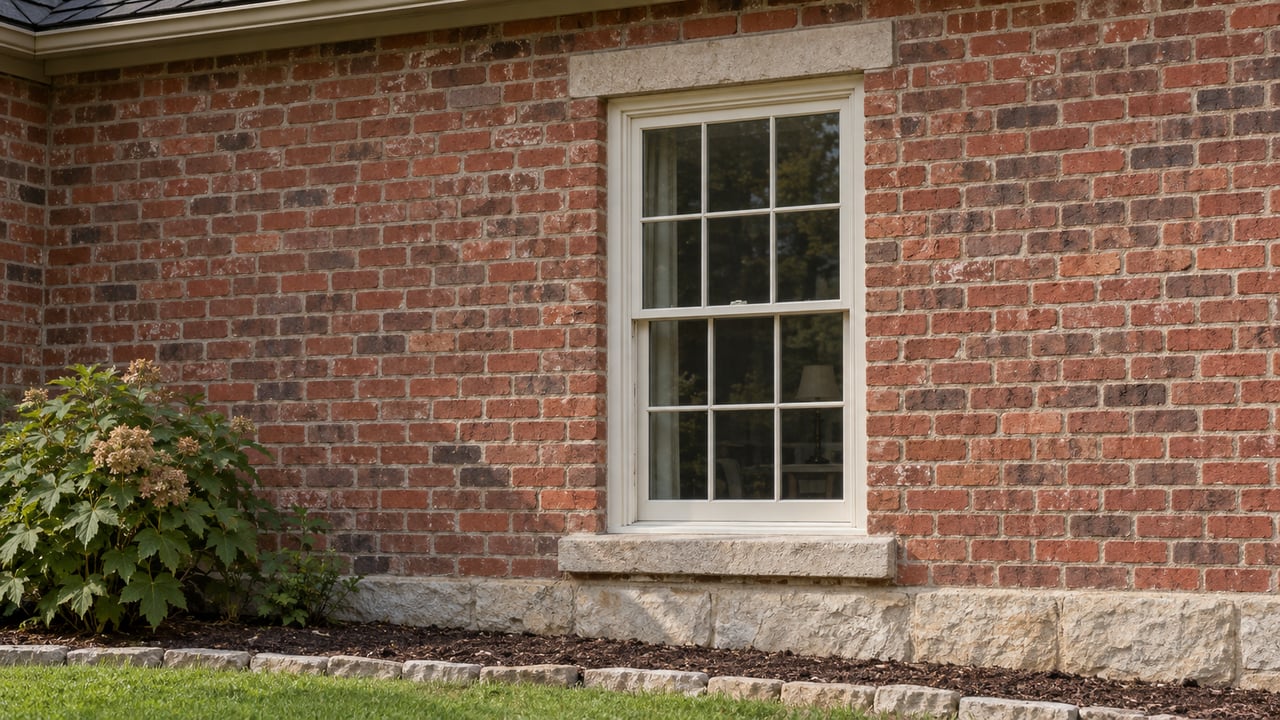
In November 2024, a Collierville property owner named Jeb Blanchard applied to replace the windows on his building at 218 E. Poplar Avenue. The project was a window replacement, with no addition or demolition involved. The application still required a full Certificate of Appropriateness review by the town's Historic District Commission, complete with a vicinity map, historic survey references dating to 2004, cutsheets for the proposed windows, and a copy of the permit itself, all filed ahead of the commission's November 19 meeting.
A full commission review for a window swap can surprise an owner until they see what triggers it. The address sits inside Collierville's Local Historic District Overlay, a boundary the town drew around its Square that has real regulatory teeth. A few blocks away, a home can carry the same "historic" reputation, even sit inside the National Register Historic District, and face none of that review for the exact same project. The two designations get talked about as if they're one thing. They aren't. Knowing which one applies to a specific address is the difference between a same-week permit and a month added to your renovation timeline before you've poured a single foundation.
Collierville's Town Square carries two separate historic boundaries that don't perfectly overlap. Memphis Heritage Inc., the regional preservation nonprofit, describes the local designation as the Local Historic District Boundary and the federal one as the National Register Historic District Boundary, and notes on its own map of the area that the two lines are drawn differently, one solid and one dashed, because they don't trace the same footprint.
The National Register listing is an honor and a door to certain preservation tax credits. It does not, by itself, give the Town of Collierville any authority over what you do to your house. The Local Historic District Overlay, often shorthand as H-1, is the one that matters at the permit counter. Properties inside that overlay fall under the jurisdiction of the town's Historic District Commission, a seven-member board whose stated duty is to preserve historic and architectural value and to weigh in on any alteration, addition, demolition, or exterior change visible from the public right of way, then approve or deny a Certificate of Appropriateness case by case.
The commission meets once a month, on the fourth Thursday at 4:00 p.m. in Town Hall. Miss that month's application deadline and your project waits for the next meeting. There is no fast lane for a small job just because it's small.
This isn't a hypothetical rule that only shows up once in a while. The Town of Collierville's own historic preservation program page states that the Historic District Commission has issued Certificates of Appropriateness for more than 300 private properties inside the H-1 Overlay. That's not an edge case. That's the ordinary cost of owning inside the line.
The Blanchard window case at 218 E. Poplar Avenue is what that looks like in practice for an owner who isn't trying to demolish anything or build up. Windows, in a historic overlay, are treated as a material change in appearance, and material changes in appearance are exactly what the commission was created to review. The paperwork trail for that single case included a historic survey from 2004 and design guideline citations, the same documentation weight you'd expect for something far larger.
If a window replacement shows the rule at its smallest scale, the former Gus's Fried Chicken building at 215 S. Center Street shows what happens when the same rule meets a much bigger project.
The restaurant operated there from 2008 to 2022, then sat vacant. In December 2019, the Historic District Commission denied a Certificate of Appropriateness for its demolition, finding the structure still carried historical significance. The building stayed standing, and empty, for years. In August 2025, the commission conditionally granted a Certificate of Economic Hardship, the mechanism that allows demolition when maintaining a structure becomes financially unreasonable, clearing the way to finally take the building down.
By January 22, 2026, the property was back in front of the commission, with McCarty Grandberry Engineering as the applicant, and a preliminary site plan for a three-story mixed-use replacement: roughly 6,747 square feet of ground-floor retail and office space with 12 residential units above it, designed to match the architecture of the existing buildings around the Square. Town planning staff noted at that meeting that the parcel sits within the Local Historic Overlay but outside the National Register district, the same split boundary at work again, just on a corner lot instead of a single-family home. Even with a staff recommendation of approval, the project still had to clear a Planning Commission meeting and a vote by the Board of Mayor and Aldermen before permits could be pulled.
Total elapsed time from the first denied demolition request to a workable path forward: more than six years. Most buyers and sellers won't face anything close to that timeline. But the mechanism that produced it, an overlay board with monthly meetings and a case-by-case standard for what counts as appropriate, is the same one that reviewed a set of replacement windows on Poplar Avenue.
The overlay's regulatory reach shows up in price, too. Listings tagged historic district in Collierville have carried a median list price of $558,000 in a recent market snapshot, notably higher than the town's broader median sale price, which has been running near $483,000 through 2026. Buyers are paying more to be inside that line, which means they're also buying into the review process that comes with it, whether or not that's spelled out in the listing description.
For a seller, the practical question isn't whether the overlay makes a home harder to sell. Buyers who want proximity to the Square generally know what they're getting into. The question is whether pending violations, open applications, or unresolved commission conditions are attached to the property, because those follow the address, not the person who owned it when the paperwork was filed. A buyer's attorney or agent asking about HDC history on a specific parcel is asking a reasonable question, not a suspicious one.
For a buyer planning any exterior work, from a new roof to a full addition, the timeline math changes the moment the parcel sits inside H-1. A single missed meeting cycle adds a month. A demolition request that the commission views as removing historical fabric can add years, as the Gus's building shows in the most literal way it fields.
A few checks are worth doing before either side of a transaction near the Square goes further:
Does National Register listing alone stop me from replacing my windows? No. National Register status recognizes a property's historical value and can open tax credit eligibility, but it doesn't give the town review authority over your renovation. Only sitting inside the Local Historic District Overlay triggers the Certificate of Appropriateness requirement.
How do I find out which boundary my address falls inside? Contact Collierville's Planning Division directly. Its zoning map shows the H-1 Overlay boundary as a distinct layer from the National Register boundary, and staff can confirm which one, or both, applies to a specific parcel.
Does interior renovation face the same review? Based on the commission's stated scope, review covers alterations, additions, demolition, and exterior changes visible from the public right of way. Interior work generally falls outside that process, though structural, electrical, or plumbing changes still need standard building permits.
If you're weighing a purchase near Collierville's Square, or thinking about listing a home that sits inside that overlay, it's worth knowing which line your address falls on before you plan a renovation or set a closing date around it. Mia Atkinson can walk through what the Historic District Commission's process would mean for your specific property. Book a call before you write the offer, not after.



With extensive market knowledge and a passion for finding dream homes, Mia is dedicated to delivering personalized solutions to meet your unique needs. Trust a top-ranked Real Estate Agent in the Memphis Region to guide you seamlessly through the real estate journey.
Let Mia know how she can assist you.

MIA ATKINSON
BROKERAGE ADDRESS
3401 MALLORY LN STE 100
FRANKLIN TN 37067