Broad Avenue Wasn't Built for Tuesdays. It's Turning Into One Anyway.
August 13, 2026
August 13, 2026
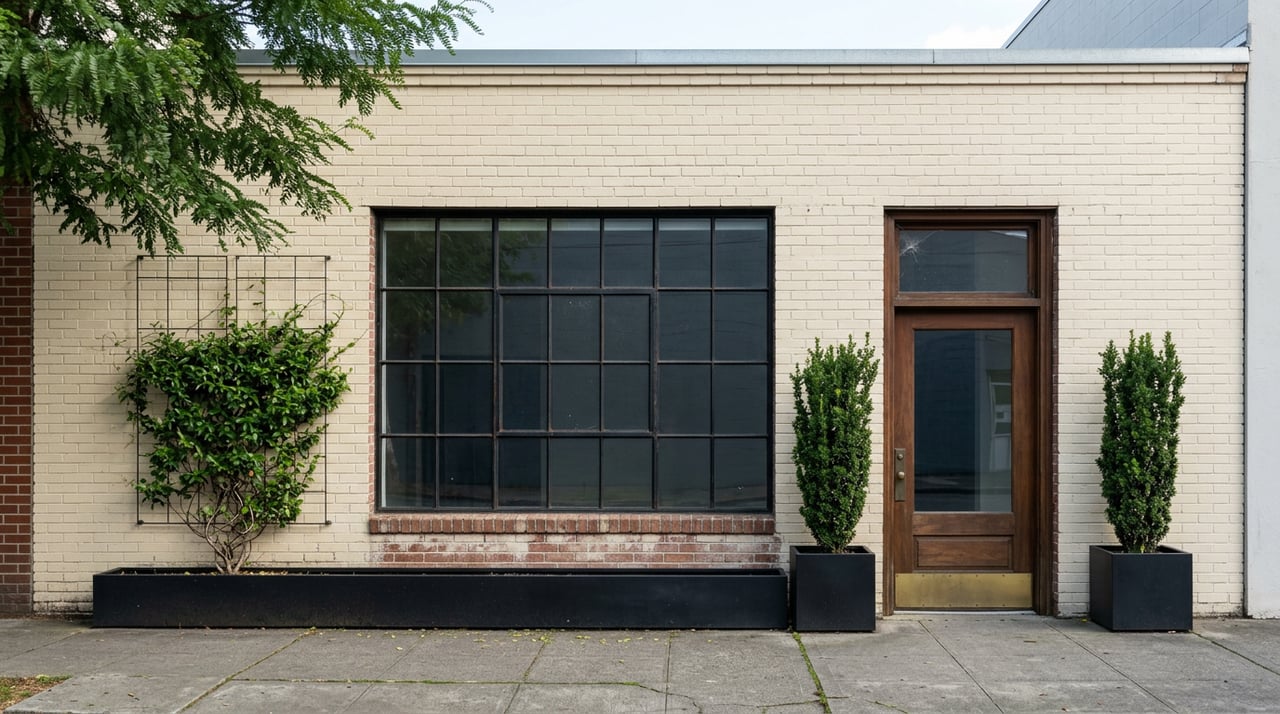
Walk the six blocks of Broad Avenue on a First Friday and you'll see what the street was designed to do. Galleries prop their doors open. Food trucks line up near the water tower. Wiseacre's patio fills before dark. It's a good night, and it happens like clockwork, the first Friday of every month except January.
But First Friday was never meant to be the whole story. Broad Avenue was built, deliberately and with public money, as a once-a-month draw for a street that spent most of the twentieth century empty. What's changed lately isn't the monthly event. It's what's showing up in between them, and that's the part worth paying attention to if you already live in Midtown or East Memphis and treat Broad Avenue as part of your week rather than a special occasion.
Broad Avenue started as the main street of Binghampton, a railroad town chartered in 1895 that got annexed into Memphis in 1919 and spent the next eighty-some years fading. The turnaround, when it came, was intentional and scheduled. In November 2010, organizers ran a two-day demonstration called "New Face for an Old Broad," temporarily filling vacant storefronts with local vendors just to prove the street could work. It did, and the transformation moved fast from there: from 2007 to 2012, empty buildings became the arts district you'd recognize today.
The public investment that followed was built around events, not everyday traffic. A $350,000 grant from ArtPlace America paid to turn a warehouse loading dock into a performance stage and the street's 150-foot water tower into a public art installation, an eight-week "Dance on Broad" festival launched to christen it. The whole point of that money was to give people a reason to show up on a schedule. It worked. Broad Avenue became known for its monthly art walk long before it became known for anything else.
That history matters because it explains why so much of what gets written about Broad Avenue still treats it as a destination you plan around, something you visit the first Friday of the month and otherwise forget. The street itself has moved past that framing. The businesses opening there now aren't betting on event traffic. They're betting on Tuesday.
The clearest signal came from Wiseacre Brewing Co., the district's flagship brewery. This summer, the Broad Avenue taproom added a full food program called Panuzzo King, mirroring the Little Bettie concept that already runs at Wiseacre's downtown location. Panuzzo King serves five sandwich options built on pizza dough that's shaped and cooked before the filling goes in, plus snacks and desserts.
A brewery doesn't build out a five-item sandwich menu to serve a crowd that only shows up once a month. That kind of investment is a bet on the Tuesday-night regular, the person who bikes over after work because there's somewhere to eat, not just something to drink. It's a small addition, but it tells you where the owners think the demand actually is.
A few years back, Broad Avenue's water tower became the center of a genuine local debate. A developer proposed blending 414 apartments with 10,000 square feet of retail directly underneath it, and the Shelby County Board of Adjustment approved the $50 million project despite pushback from neighboring businesses over parking and views. That project is built now, operating as Link Apartments Broad Ave, and its leasing marketing plays up units with water tower views, alongside a saltwater pool and courtyards designed for residents to use daily rather than occasionally.
That distinction matters more than it sounds like it should. A district that draws its foot traffic from apartment residents behaves differently than one that draws it from people who drove in for an event. Residents don't need a reason to walk down to City & State for coffee or swing by Merchants on Broad on a random afternoon. They live there. The water tower that was once purely a piece of public art is now also, literally, someone's view from their balcony.
Broad Avenue also hosts the headquarters of the Memphis Greenline, the cycling path that was first proposed in 2011 as a connector between Overton Park and Shelby Farms Park, two of the city's largest green spaces. The street was one of the earliest test cases for Memphis bike lanes, back when Livable Memphis ran a demonstration to prove the concept would work. It did, and the lanes became permanent.
That gives Broad Avenue a role most arts districts don't have. It isn't just a place people arrive at. It's a place people pass through on the way to somewhere else, on a bike, on a Tuesday morning, with no art walk running and no reason to stop except that the coffee is good and the ride is pleasant. A destination street draws visitors. A route street earns regulars.
None of this works as a daily-use argument unless the businesses are actually open outside of First Friday. According to Memphis Travel's own guide to the district, hours vary shop to shop, and a number of retailers close on Mondays. But plenty of the anchors run a normal weekly schedule built for locals, not event crowds:
More than seventy locally-owned businesses now occupy the district's storefronts, and most of them are counting on customers who come back on their own schedule, not the calendar's.
If you live in Midtown, East Memphis, or anywhere along the Sam Cooper corridor, the useful shift isn't that Broad Avenue got a new monthly festival or a bigger art walk. It's that the street stopped needing the excuse. A brewery added a real menu because weeknight traffic justifies it. An apartment complex built its marketing around a view residents see every day, not once a month. A bike path runs straight through the middle of it, turning casual visitors into regulars almost by accident.
That's worth knowing the next time you're deciding where to grab dinner on a Wednesday instead of driving to a spot across town. Broad Avenue doesn't need First Friday to make sense anymore. It just needs you to treat it like the rest of your week.
If you're the kind of Memphis resident who pays attention to how neighborhoods like Binghampton and Broad Avenue are changing, and you're curious what that means for property values or timing nearby, Mia Atkinson tracks these shifts across the Memphis metro as part of her daily work. Book a Call whenever you're ready to talk through what you're seeing.

With extensive market knowledge and a passion for finding dream homes, Mia is dedicated to delivering personalized solutions to meet your unique needs. Trust a top-ranked Real Estate Agent in the Memphis Region to guide you seamlessly through the real estate journey.
Let Mia know how she can assist you.

MIA ATKINSON
BROKERAGE ADDRESS
3401 MALLORY LN STE 100
FRANKLIN TN 37067