Discover the Arlington, TN Neighborhood Lifestyle
Arlington is the rare Memphis-area suburb that still feels like a town. It has a historic square with a depot at its center, a calendar of festivals people actually plan their weekends around, and — a mile in any direction — subdivisions of brick and board-and-batten homes that didn't exist twenty-five years ago. That combination is exactly why buyers keep landing here, and why the market behaves differently than it does in Bartlett or Cordova.
Here's what you need to know before you start touring.
Arlington occupies the northeast corner of Shelby County, roughly 30 miles from Downtown Memphis along the I-40 corridor. It's the last incorporated town before you cross into Fayette County, which explains a lot about its character: development pressure comes from one direction, and farmland sits on the other.
Bartlett and Lakeland are its neighbors to the west, Millington to the northwest, and open Fayette County land to the east. Two roads define daily life here — Interstate 40 running east-west, and State Route 385 (Paul Barrett Parkway), the outer loop that lets residents reach Germantown and Collierville without ever touching Memphis traffic. That dual access is the practical reason Arlington grew as fast as it did.
Arlington started in the 1830s as a farming settlement called Haysville, named for landowner Samuel Hays. What changed everything was the railroad: when the Memphis and Ohio line came through in the 1850s, the town became a shipping point for cotton and West Tennessee agricultural goods. The depot wasn't decorative — it was the reason the town existed.
In 1883, the name changed to Arlington, partly to end postal confusion with a similarly named town and partly as a nod to Arlington National Cemetery. Incorporation followed in December 1900, which established the municipal government and the commercial core around Depot Square that still anchors the town today.
Then, for most of a century, not much happened. Arlington stayed agricultural while Memphis sprawled eastward. That changed in the early 2000s, when master-planned residential development arrived in force and Arlington became one of the fastest-growing municipalities in Shelby County. If you're touring homes here, you're mostly looking at the results of the last two decades — with a small, protected pocket of the 1800s at the center.
The honest version: Arlington is quiet, residential, and community-organized. Social life revolves around youth sports, civic groups, and the events calendar at Depot Square — Arlington in April, Music on the Square, the Christmas parade. People show up to these things. It's the kind of place where you'll recognize faces at the grocery store within a few months.
It's also firmly car-dependent. There's no public transit, and errands mean driving — though most of them are short. Working residents typically spend 25 to 35 minutes getting to Memphis, Germantown, or the medical corridor.
Financially, Arlington rewards its residents. Tennessee has no state income tax, median household incomes here run high for the metro, and the overall cost of living stays well below comparable suburban markets nationally. Housing is the line item where Arlington costs more than the Shelby County average — but you're paying for newer construction and low density, and buyers tend to feel they got it.
Arlington's housing breaks into three distinct categories: the historic core, the mid-2000s growth wave, and the newest master-planned builds. Knowing which one you're in tells you most of what you need to know about lot size, HOA involvement, and resale.
Depot Square / Historic Core is the oldest part of town — 19th-century frame homes, restored bungalows, and walkable streets. Inventory here is thin and moves on character rather than square footage. If you want to walk to coffee and be at the center of every festival, this is the only part of Arlington that offers it.
Arlington Trails and Arlington Trace came out of the mid-2000s boom. These are mid-to-large single-family homes on established streets with mature trees — the sweet spot for buyers who want a settled neighborhood feel without paying for brand-new construction.
Villages at White Oak is a popular choice for growing families: modern traditional homes with brick facades, generous floor plans, multi-car garages, and neighborhood common areas.
Belmont and Myers Park sit at the upper end. Expect executive-scale homes with traditional Southern craftsmanship, larger lots, quiet cul-de-sacs, and active homeowner associations.
Ewing Place and Cambridge Manor represent the 2010s and 2020s builds — energy-efficient, mid-range, turnkey. These appeal to first-time suburban buyers and commuters who don't want a renovation project and want to be near the major routes.
Arlington is overwhelmingly a single-family, owner-occupied market. Within that, five styles dominate:
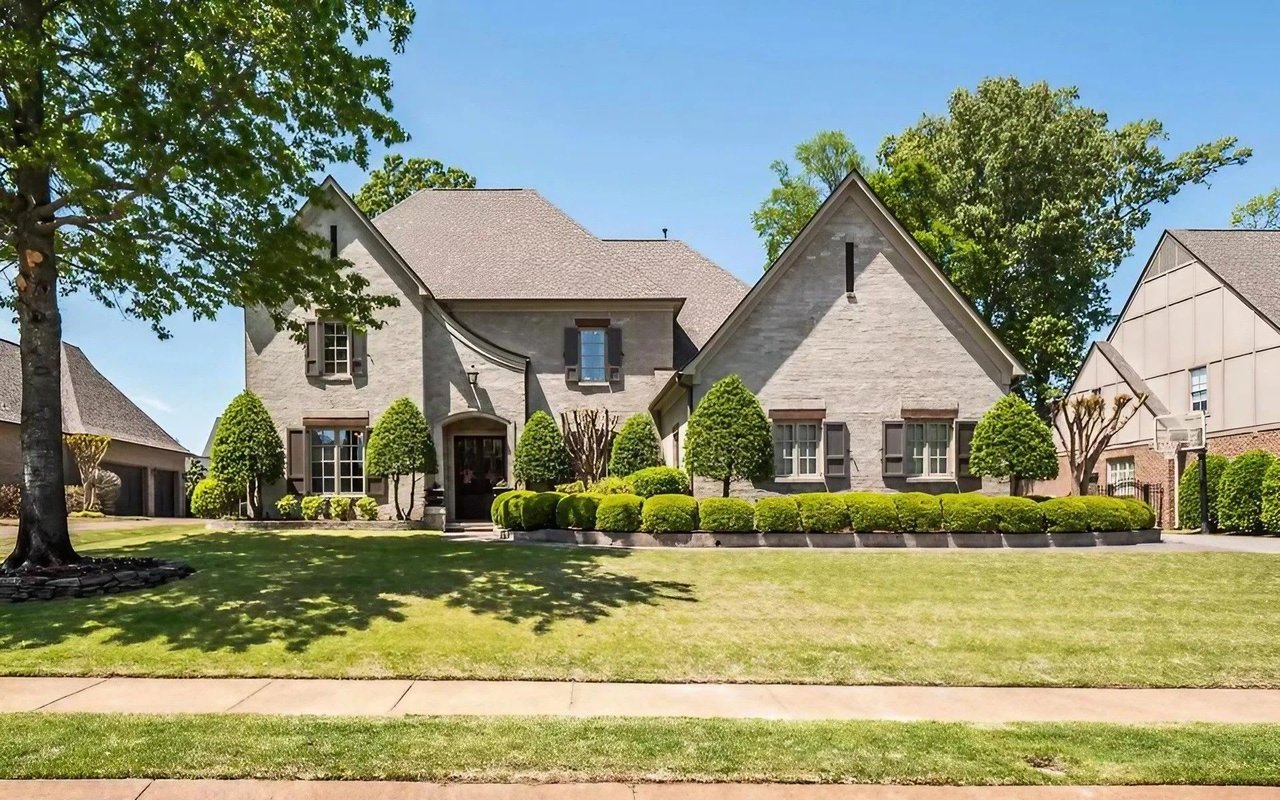
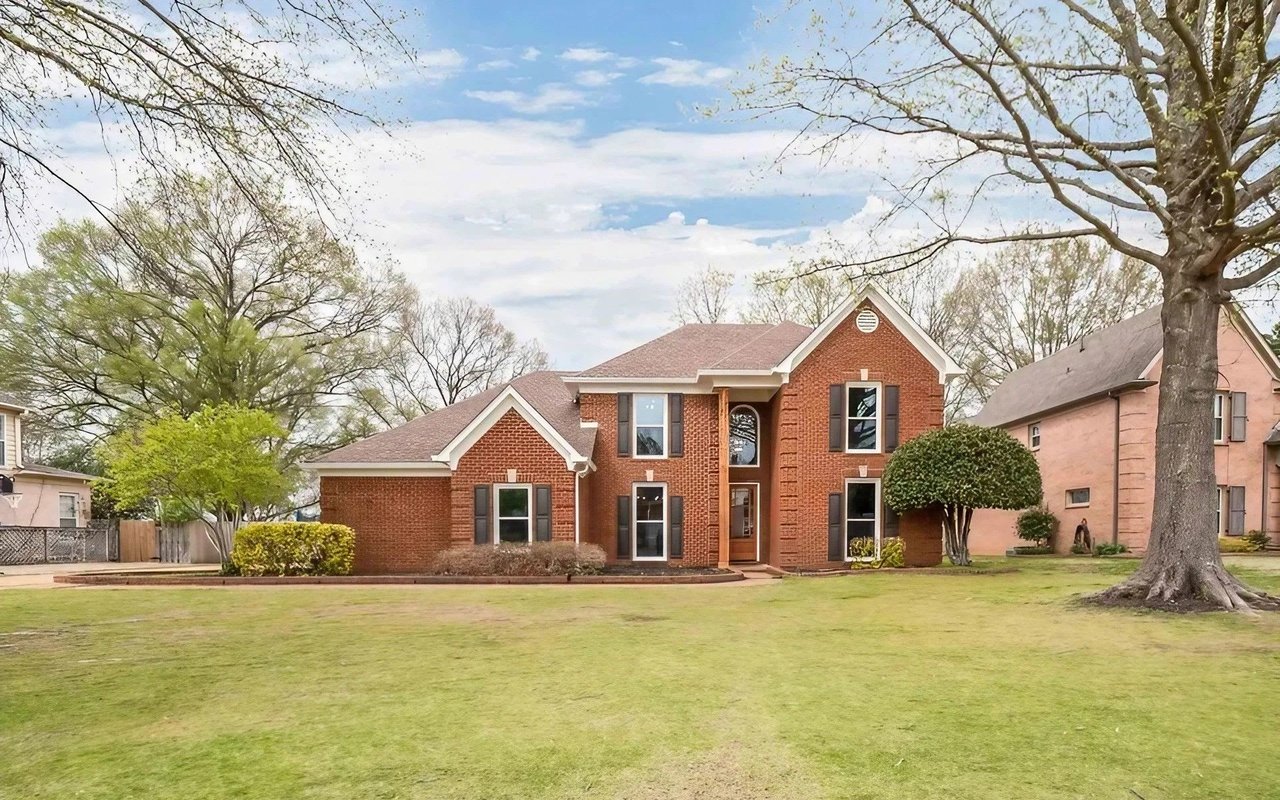
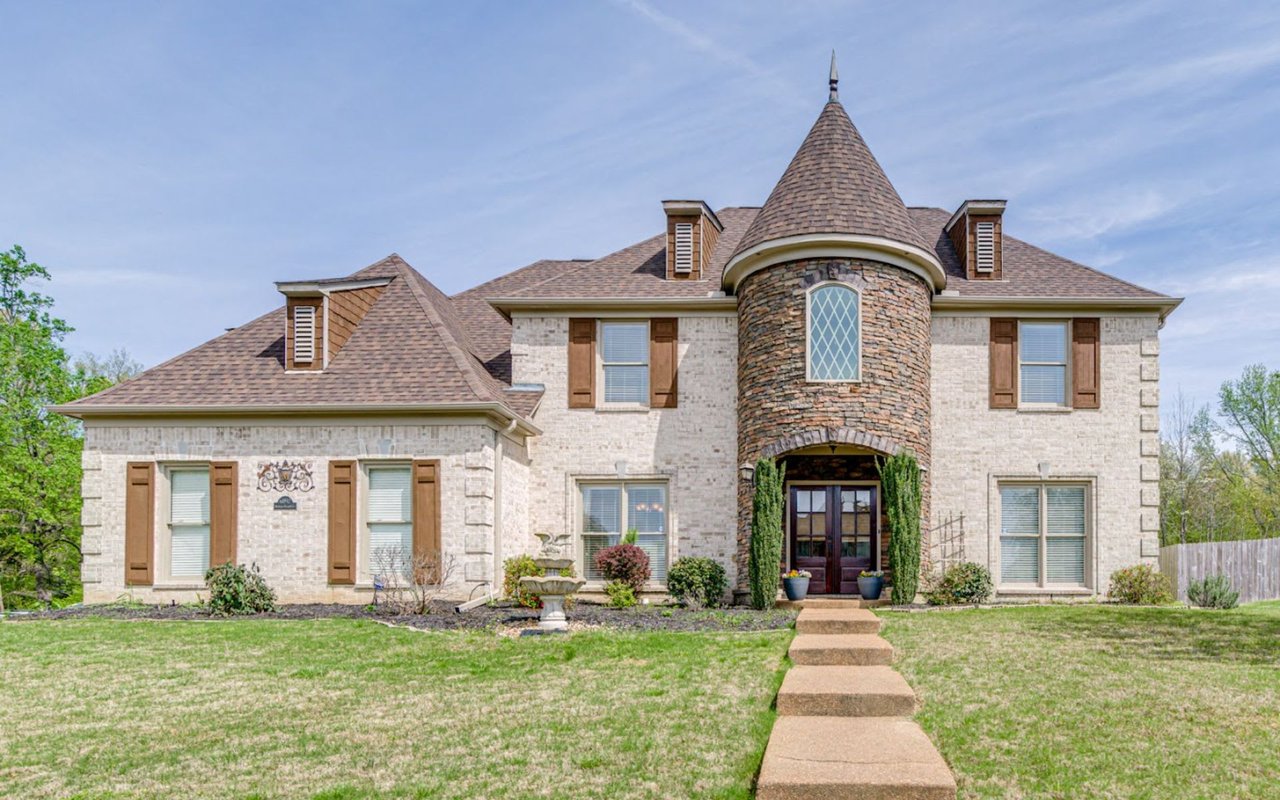
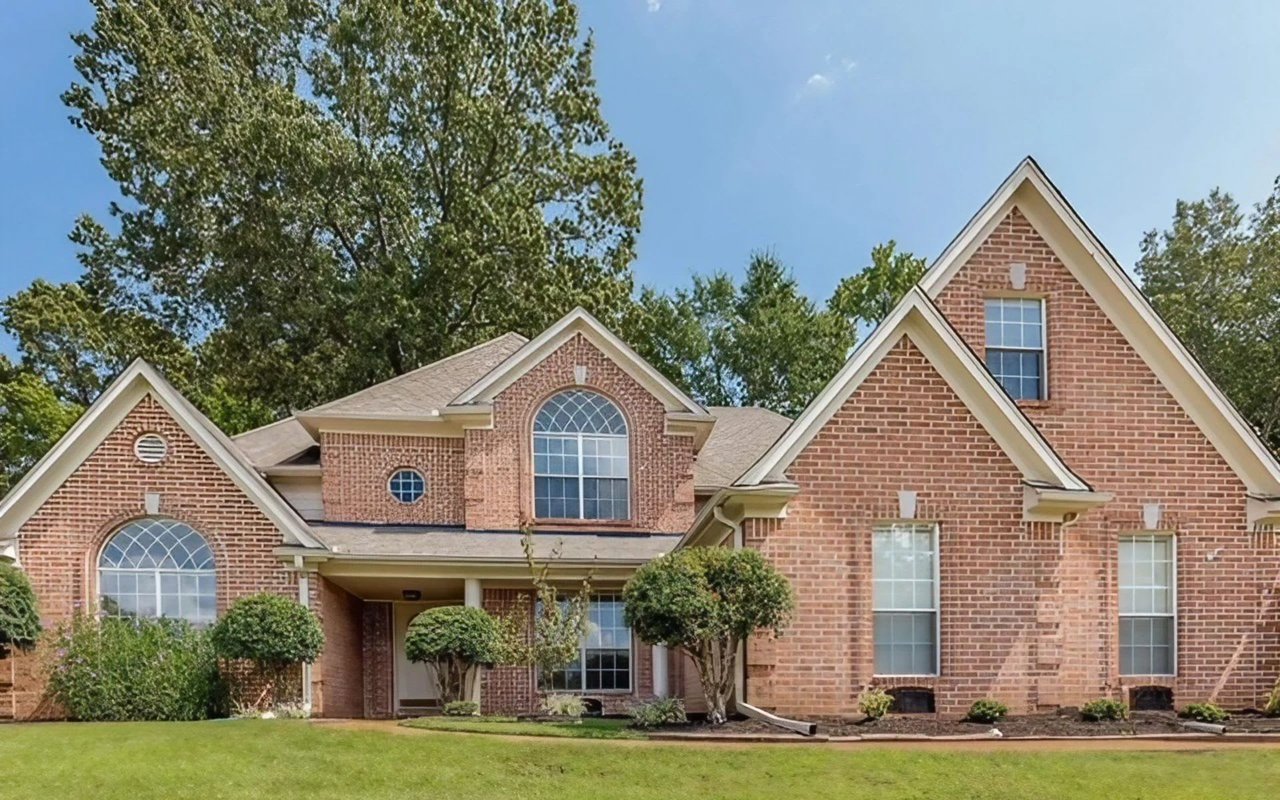
Traditional brick and neo-traditional homes are the default. Built from the early 2000s forward, these run three to five bedrooms with heavy brick exteriors, steep rooflines, attached multi-car garages, and open interior layouts.
Modern farmhouse and craftsman designs show up in the newer subdivisions — board-and-batten siding, deep covered porches, accent stone or painted brick, and contemporary finishes inside.
Historic and Victorian-era properties cluster around Depot Square: restored late-1800s frame homes, Southern bungalows, and original farmhouses. Small supply, high character, and a very specific buyer.
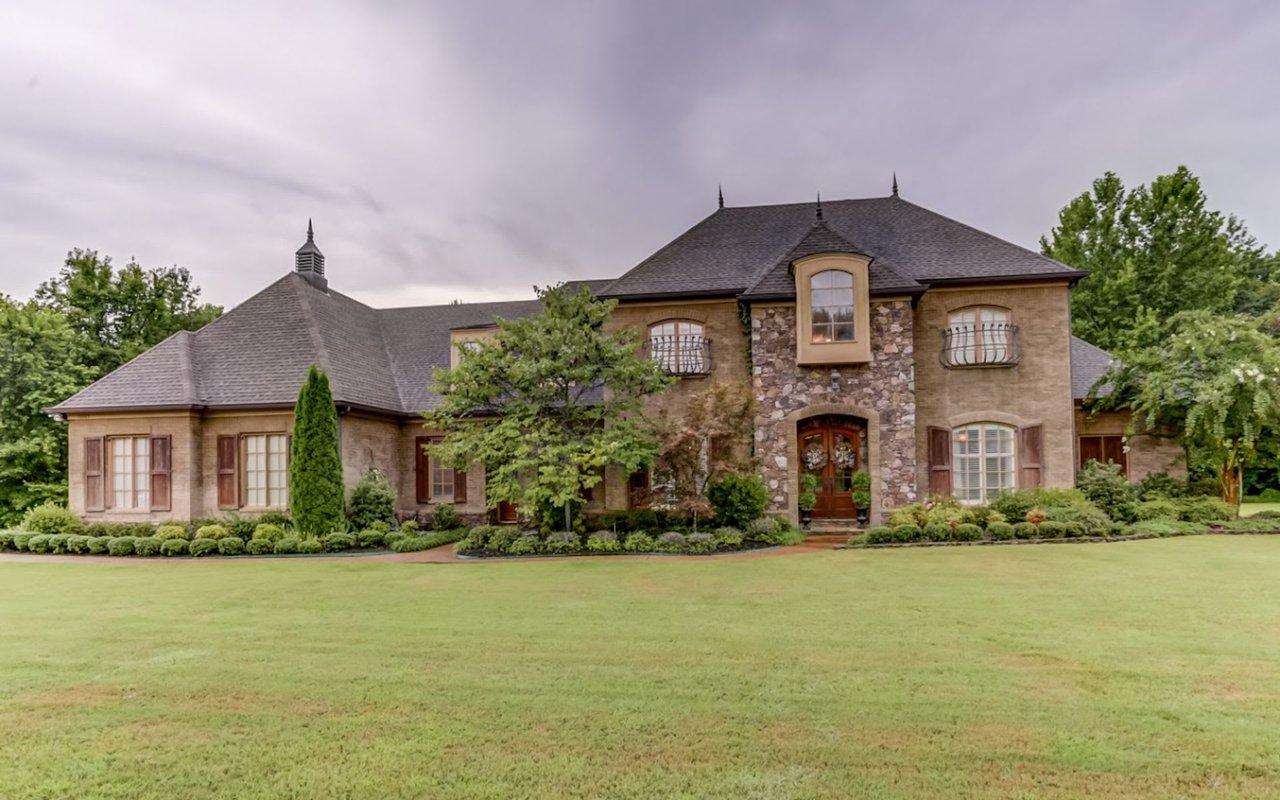
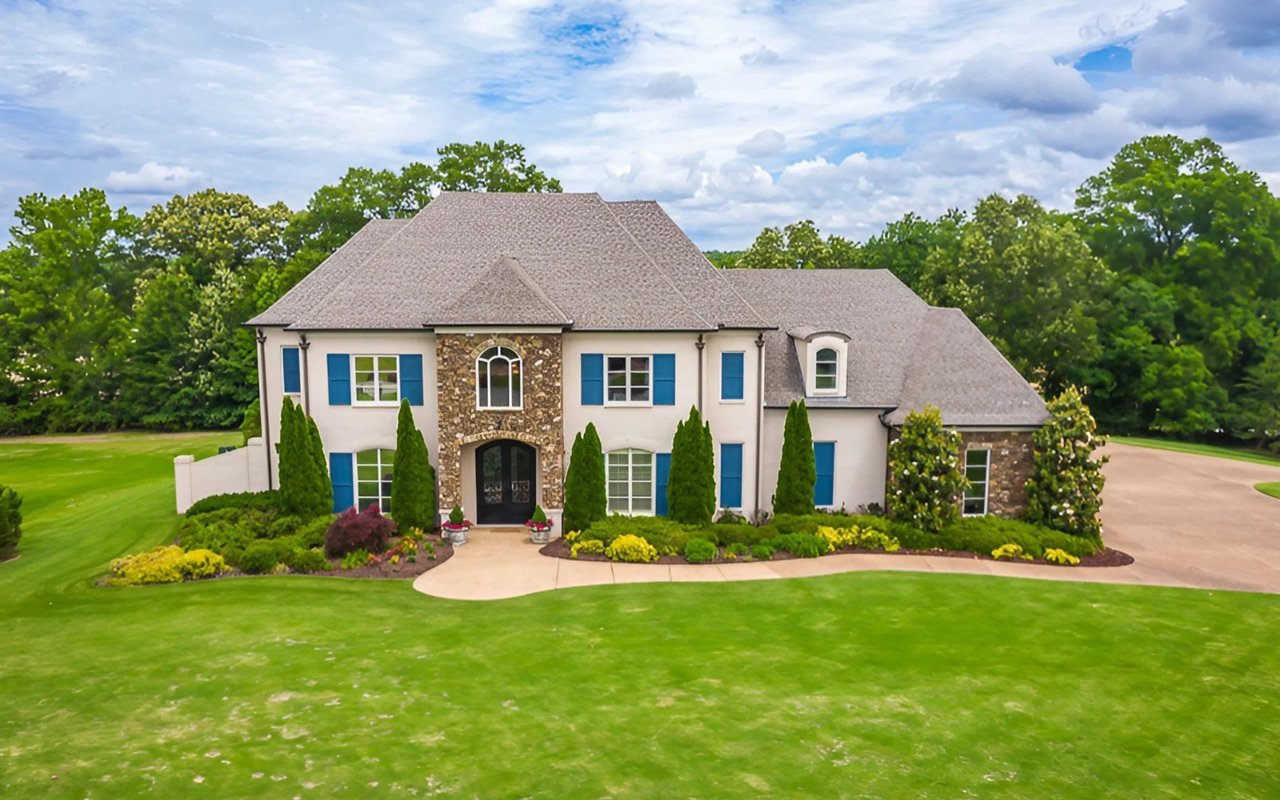
Custom executive estates exist in boutique gated pockets and on peripheral acreage, with multi-acre lots, private pools, and genuinely custom architecture.
Townhomes and rental communities are the exception rather than the rule. A handful of recent master-planned projects introduced low-density townhomes, largely serving young professionals and downsizing seniors, but if you need a rental or an attached home, your options are limited.
Arlington sits among the metro's highest-value markets, alongside Germantown and Collierville. The driver is straightforward: demand for newer, low-density, turnkey housing in a small municipality with limited developable land.
Metric | Typical Range | What It Means |
|---|---|---|
Median sales price | $460,000 – $490,000 | Well above the Shelby County average |
Price per square foot | $160 – $185 | Reflects 2000s-and-newer construction |
Days on market | 30 – 60 days | Balanced; updated homes under $500K move fast |
Homeownership rate | ~85% – 90% | Unusually high for the metro |
What this means in practice: the sub-$350K segment is nearly nonexistent. Well-presented homes priced under $500,000 draw the most competition, while higher-end and acreage properties need realistic pricing and patience. Sellers who invest in presentation before listing consistently see the difference in both speed and final number.
Arlington's cost index runs on the higher side for the Memphis metro — almost entirely because of the housing stock — while everyday expenses like groceries, healthcare, and services land near the national average.
The tax picture is where Arlington gets genuinely favorable. Tennessee levies no state income tax on earned wages. State sales tax is 7%, with local add-ons bringing the total to 9.75%.
Because Arlington is an incorporated municipality inside Shelby County, property owners pay two separate rates, both assessed on 25% of appraised market value:
On a $400,000 home, assessed value is $100,000, which puts the combined annual bill at roughly $3,830 — about $1,130 to the town and $2,700 to the county. Water and sewer are managed municipally.
That dual-rate structure surprises buyers coming from unincorporated Shelby County, so it's worth building into your budget before you write an offer rather than after.
Destination | Distance | Rush-Hour Drive | Route |
|---|---|---|---|
Downtown Memphis | ~30 mi | 35 – 50 min | I-40 West |
East Memphis / Poplar corridor | ~22 mi | 25 – 40 min | I-40 W to I-240 or Sam Cooper |
Germantown / Collierville | ~18 mi | 20 – 30 min | SR-385 South |
Memphis Int'l Airport (MEM) | ~31 mi | 30 – 40 min | I-40 W to I-240 S, or SR-385 S |
Ford BlueOval City (Stanton) | ~22 mi | 20 – 25 min | I-40 East |
The BlueOval City line deserves attention. Arlington is one of the closest established suburbs to Ford's Stanton campus, and it's the shortest commute on this list. For buyers tied to that corridor, Arlington's location is a structural advantage that won't change.
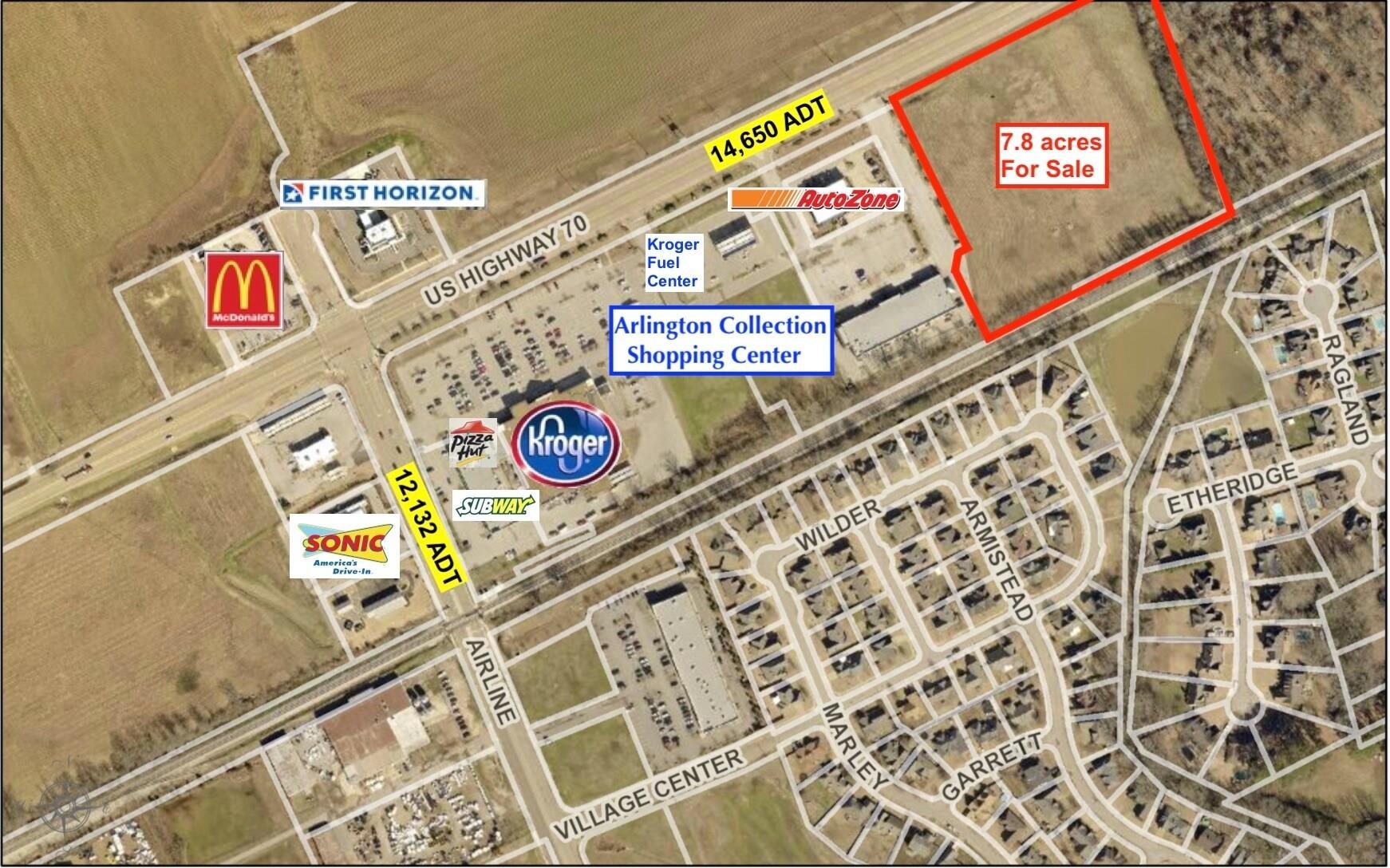
Retail here concentrates along Airline Road and Milton Wilson Boulevard and around the I-40 interchange — Kroger, pharmacies, bank branches, fast-casual restaurants, and local service providers. Everything routine is close.
Local dining is a genuine strength for a town this size. The Kitchen Table handles Southern comfort food, Rizzi's Pizza Café and Ricos Tacos & 'Ritas cover the casual end, and Crave is the local coffee-and-sweets stop. Several cluster near the historic core, which is part of what makes Depot Square feel like a destination rather than a monument.
For bigger-box shopping — Target, Costco, national department stores — it's a 10-to-15-minute drive west to Lakeland or Wolfchase Galleria in the Bartlett/Cordova area. Seasonally, The Market at the Crossing brings local farmers, bakers, artisans, and food trucks to the Crossing Pavilion.
The town maintains more than 68 acres of parkland and athletic space, and it's used hard.
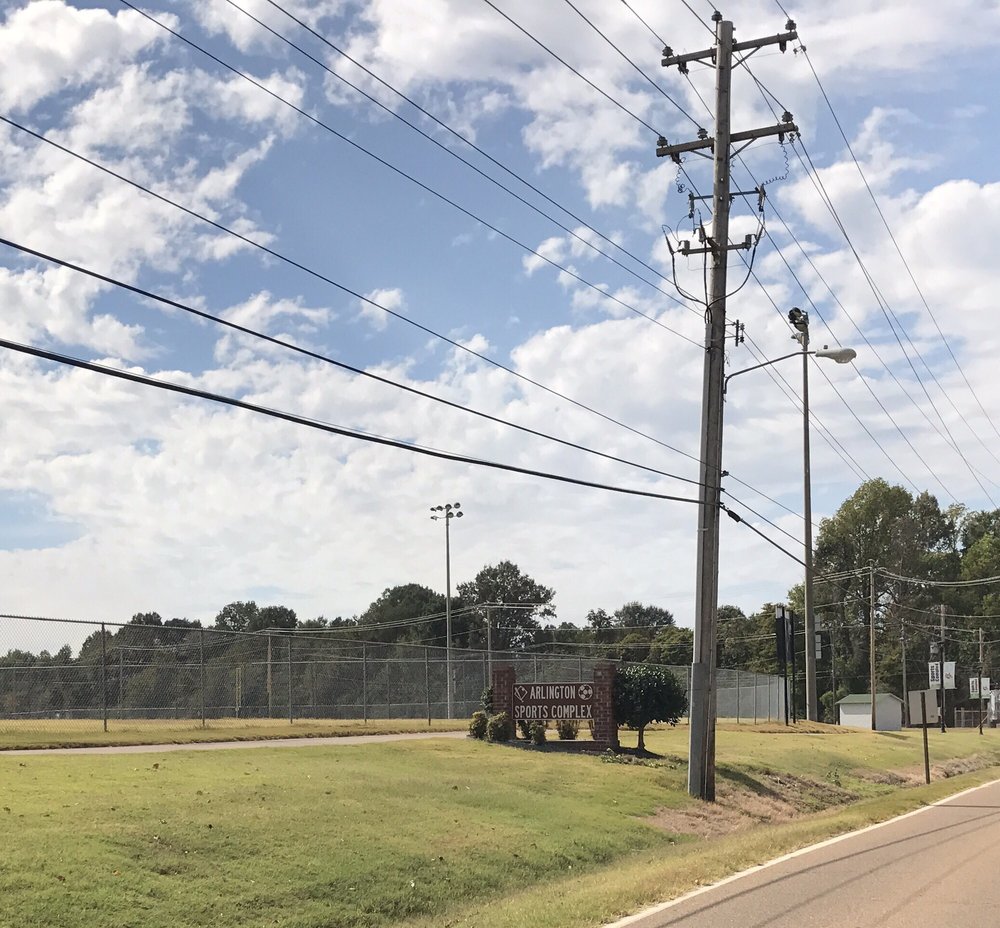
Arlington Sports Complex is the center of gravity — baseball, softball, and soccer fields, concessions, walking paths, and open green space. It hosts regional tournaments and the annual Star Spangled Spectacular. Forrest Street Park and The Crossing offer a pavilion, trails, playground equipment, and the lawns where the farmers market and community programs happen. Playground of Dreams, a community-built wooden playground inside Hughes-College Hill Park, is the go-to for younger kids and birthday parties. Julian M. Williamson, Jr. Lake provides a quieter option — catch-and-release fishing, wildlife, and easy walks.
Worth watching if you're buying: the town's Greenway and Trail Master Plan is building out a connected network linking subdivisions to Depot Square and the Loosahatchie River basin. Homes that end up near completed trail segments tend to gain an amenity they weren't originally priced for.
Arlington in April is the flagship — a spring festival in Depot Square with hundreds of regional craft vendors, live music, food trucks, and family entertainment.
Music on the Square runs the third Saturday evening of each month from May through October. Free outdoor concerts, lawn chairs, local bands. It's the most reliable read on Arlington's social character.
Star Spangled Spectacular takes over the Sports Complex every Fourth of July with music, vendors, kids' activities, and fireworks.
BBQ FallFest and the Arlington 5K arrive in autumn. The sanctioned barbecue competition draws pitmasters and crowds from across Shelby County; the 5K raises money for the local education foundation.
The holiday stretch starts in November with a Holiday Market, then the Depot Square tree lighting, the Christmas parade with local school bands and floats, and Christmas on the Square.
Arlington suits some buyers extremely well and frustrates others. The honest breakdown:
Arlington is likely a strong fit if you want low-density, quiet subdivisions with active HOAs and low crime; commute to the eastern Shelby corridor, Fayette County, or BlueOval City; value newer construction and turnkey condition; or want to live somewhere with real community participation — youth sports, civic groups, festivals with actual turnout.
Arlington may not be the right fit if you want nightlife and urban energy — density is low and late-night commercial activity is limited by ordinance; need to live without a car, since there's no public transit; are hunting bargains, because inventory under $350K is scarce and prices sit well above county medians; or want historic architecture, which outside Depot Square is almost entirely 2000s-era master-planned construction.
If those trade-offs read as acceptable, Arlington tends to be a place people stay — the 85–90% homeownership rate isn't an accident.
Choosing between Arlington and its neighbors — Lakeland, Bartlett, Collierville, Germantown — comes down to details that don't show up in a listing photo: which subdivision holds value, how the dual tax rate affects your monthly number, whether a trail extension is coming through your street. That's where local experience matters.
Mia Atkinson is a top 1% ranked agent in the Memphis region, a Lifetime Member of the Multi-Million Dollar Club, and has earned Icon Status at eXp Realty. She also hosts the Emmy-nominated, Telly Award-winning show American Dream, which profiles Memphis-area neighborhoods and the people and businesses in them — so she brings a genuinely deep read on how these communities differ. Whether you're a first-time buyer trying to understand the market or preparing to sell an Arlington home, she'll give you a straight assessment of where you stand.
Reach Mia at 901.316.6552 or [email protected]. No pressure, just honest insight into what Arlington can offer you.
14,989 people live in Arlington, where the median age is 35.2 and the average individual income is $43,591. Data provided by the U.S. Census Bureau.
Total Population
Median Age
Population Density Population Density This is the number of people per square mile in a neighborhood.
Average individual Income
There's plenty to do around Arlington, including shopping, dining, nightlife, parks, and more. Data provided by Walk Score and Yelp.
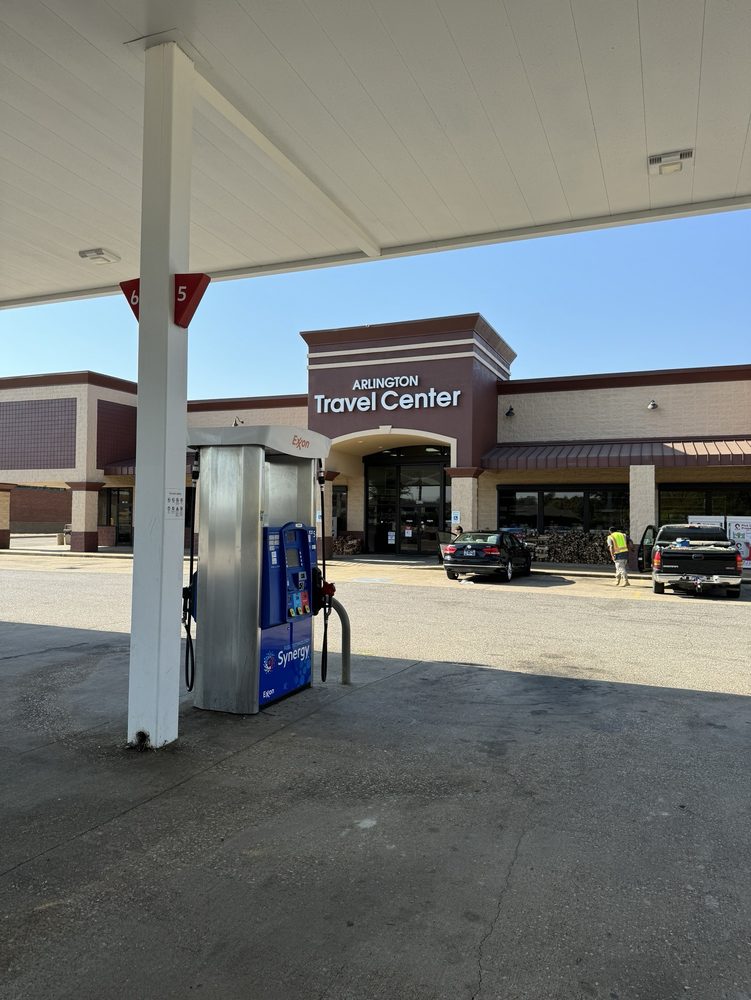
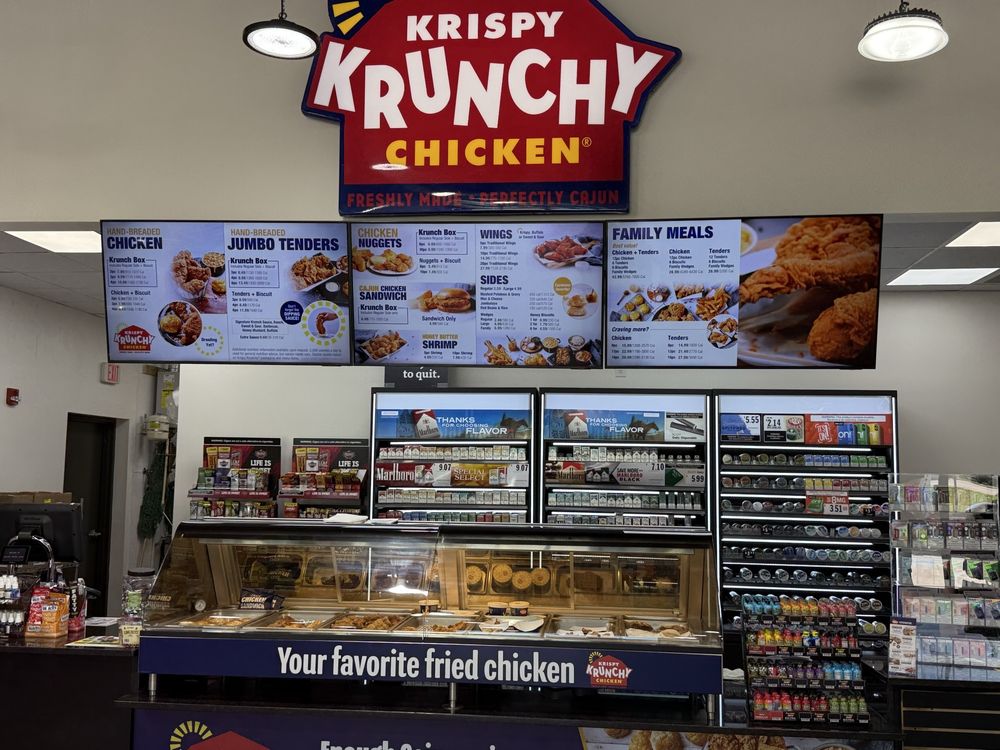
Explore popular things to do in the area, including Momma K’s Bake Shop, Air Line Food and Fuel, and Krispy Krunchy Chicken.
| Name | Category | Distance | Reviews |
Ratings by
Yelp
|
|---|---|---|---|---|
| Dining | 0 miles | 0 reviews | 0/5 stars | |
| Dining | 0.24 miles | 2 reviews | 5/5 stars | |
| Dining | 0.29 miles | 0 reviews | 0/5 stars | |
| Dining | 0.29 miles | 0 reviews | 0/5 stars | |
| Dining · $$ | 0.55 miles | 121 reviews | 3.8/5 stars | |
| Dining | 0.61 miles | 1 review | 1/5 stars | |
| Dining | 0.66 miles | 11 reviews | 4/5 stars | |
| Dining | 0.74 miles | 4 reviews | 2.3/5 stars | |
| Dining | 0.74 miles | 5 reviews | 3/5 stars | |
| Dining | 0.75 miles | 4 reviews | 4.8/5 stars | |
| Dining | 0.8 miles | 31 reviews | 2.3/5 stars | |
| Dining | 0.92 miles | 5 reviews | 3.2/5 stars | |
| Dining | 1.66 miles | 3 reviews | 2.3/5 stars | |
| Dining · $ | 1.7 miles | 34 reviews | 2.9/5 stars | |
| Shopping | 1.34 miles | 9 reviews | 3.9/5 stars | |
| Active | 0 miles | 0 reviews | 0/5 stars | |
| Active | 1.38 miles | 2 reviews | 4.5/5 stars | |
| Active | 1.55 miles | 0 reviews | 0/5 stars | |
| Active | 1.56 miles | 1 review | 3/5 stars | |
| Beauty | 0.74 miles | 9 reviews | 2.7/5 stars | |
| Beauty | 0.75 miles | 0 reviews | 0/5 stars | |
| Beauty | 0.76 miles | 3 reviews | 2.3/5 stars | |
| Beauty | 0.84 miles | 0 reviews | 0/5 stars | |
| Beauty | 1.36 miles | 0 reviews | 0/5 stars | |
|
|
||||
|
|
||||
|
|
||||
|
|
||||
|
|
||||
|
|
Arlington has 4,726 households, with an average household size of 3.17. Data provided by the U.S. Census Bureau. Here’s what the people living in Arlington do for work — and how long it takes them to get there. Data provided by the U.S. Census Bureau. 14,989 people call Arlington home. The population density is 651 and the largest age group is Data provided by the U.S. Census Bureau.
Total Population
Population Density Population Density This is the number of people per square mile in a neighborhood.
Median Age
Men vs Women
Population by Age Group
0-9 Years
10-17 Years
18-24 Years
25-64 Years
65-74 Years
75+ Years
Education Level
Total Households
Average Household Size
Average individual Income
Households with Children
With Children:
Without Children:
Marital Status
Blue vs White Collar Workers
Blue Collar:
White Collar:
With extensive market knowledge and a passion for finding dream homes, Mia is dedicated to delivering personalized solutions to meet your unique needs. Trust a top-ranked Real Estate Agent in the Memphis Region to guide you seamlessly through the real estate journey.
Let Mia know how she can assist you.

MIA ATKINSON
BROKERAGE ADDRESS
3401 MALLORY LN STE 100
FRANKLIN TN 37067